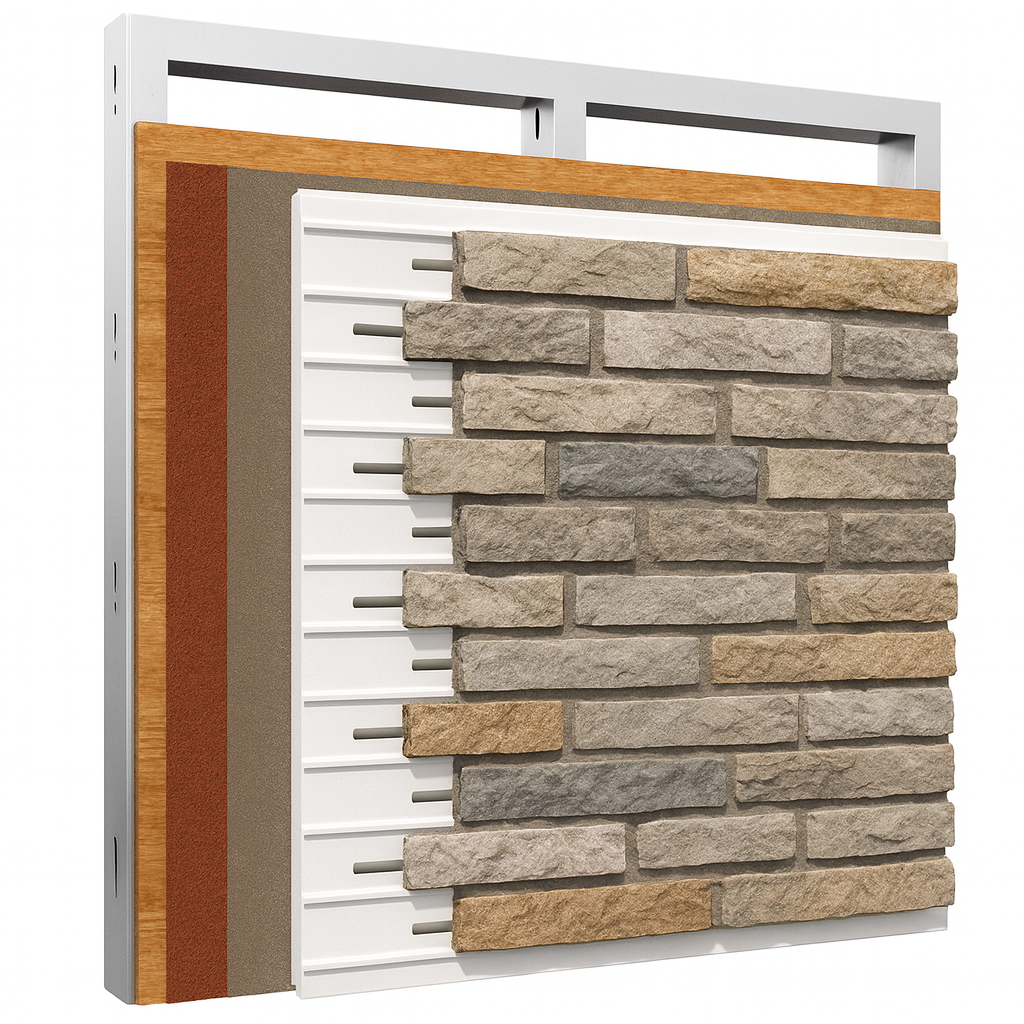
Moisture is one of the biggest threats to your building envelope. When water vapor gets trapped inside wall assemblies, it can lead to mold growth, structural decay, and a sharp drop in insulation performance. Old Mill Building Products designs its insulated wall panels with built-in moisture control features that protect your project from these risks.
This article explains how drainage, ventilation, and weather barriers work together in insulated wall panels. You'll learn why each layer matters, where moisture problems typically occur, and how the right system can help you meet code requirements while improving energy efficiency.
Key Takeaways: How Moisture Management Works in Insulated Wall Panels
- Drainage channels direct bulk water away from the wall assembly before it can saturate materials or degrade insulation R-value.
- Ventilation cavities allow trapped moisture to evaporate and escape, preventing long-term damage from condensation.
- Weather barriers act as the primary defense layer, blocking liquid water while allowing water vapor to pass through.
- Old Mill Building Products integrates drainage and ventilation directly into the Panel+ system for reliable, code-compliant moisture control.
- Proper moisture management maintains thermal performance, reduces maintenance costs, and extends your building's service life.
What Is Moisture Management in Insulated Wall Panels?
Moisture management refers to the strategies and materials used to control water movement through your wall assembly. The goal is to keep bulk water out, allow incidental moisture to drain or dry, and prevent condensation from forming inside the wall cavity.
Insulated wall panels face unique moisture challenges. Because they create a tight thermal envelope, any moisture that enters has fewer pathways to escape. A well-designed panel system addresses this by incorporating drainage planes, ventilation gaps, and vapor-appropriate barriers at the right locations.
According to the U.S. Department of Energy, air movement accounts for more than 98% of water vapor movement in building cavities. This means your wall system needs to manage both liquid water and airborne moisture simultaneously.
How Do Drainage Paths Protect the Building Envelope?
Drainage paths create channels for water to flow downward and exit the wall assembly. When rain penetrates your cladding—and some always does with reservoir materials like brick or stucco—these channels direct it safely to weep holes or flashings at the bottom of the wall.
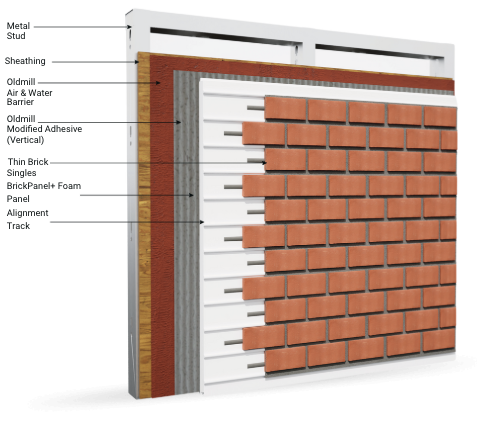
Modern insulated panels often include cross-drainage channels engineered directly into the foam substrate. These channels run both vertically and horizontally, creating a network that handles water from multiple entry points. The Panel+ system from Old Mill Building Products incorporates this cross-drainage design, giving you moisture protection that's built into the panel rather than added as a separate component.
Without adequate drainage, water collects behind your cladding and saturates the insulation. Wet insulation loses R-value dramatically—sometimes by 50% or more. By keeping water moving and exiting the assembly quickly, drainage paths preserve your thermal performance.
Why Does Ventilation Matter Behind Wall Cladding?
Ventilation cavities create air space between your cladding and the water-resistive barrier. This air gap serves two critical functions: it gives drainage water room to flow freely, and it allows moisture-laden air to circulate and dry out naturally.
The IRC building code requires a minimum 1-inch ventilation and draining space for anchored masonry veneers like brick and stone in all climate zones. Many architects specify larger gaps for projects in humid climates or with reservoir claddings that absorb and release moisture over time.
Effective ventilation relies on proper detailing at the top and bottom of your wall. Air enters through weep openings at the base, rises as it warms behind the sun-heated cladding, and exits at the top through vents or soffit openings. This stack effect keeps the drainage plane dry between rain events.
How Do Weather Barriers Control Moisture in Wall Assemblies?
Weather barriers—also called water-resistive barriers (WRB)—form your wall's primary defense against liquid water intrusion. They sit between the drainage cavity and your insulation or sheathing, stopping any water that gets past the cladding while still allowing water vapor to pass through from inside the building.
Fluid-applied weather barriers have become increasingly popular for commercial and high-performance residential projects. Unlike sheet membranes, they conform to irregular substrates and create a monolithic coating with no seams or laps where water can sneak through. Old Mill Building Products offers a fluid-applied Weather Barrier designed to work with the Panel+ system, creating an integrated air and water protection layer.
The permeability rating (measured in perms) determines how readily vapor moves through your barrier. In most U.S. climates, a WRB with moderate permeability allows walls to dry in both directions while still blocking liquid water effectively.
Where Do Moisture Failures Typically Occur in Wall Panels?
Penetrations and transitions are the most common failure points. Windows, doors, utility penetrations, and intersections between different wall systems all create opportunities for water to bypass your weather barrier. Proper flashing and sealant details at these locations are essential.
Another frequent failure mode involves vapor drive in air-conditioned buildings. In hot, humid climates, moisture can migrate from outside to inside through the wall assembly. If that vapor hits a cold surface—like the back of an air-conditioned interior wall—it condenses. Specifying insulation and barriers appropriate for your climate zone prevents this problem.
Installation quality also matters significantly. Gaps in weather barrier coverage, improperly lapped seams, or crushed drainage channels can all undermine an otherwise well-designed system. Panel systems with factory-integrated drainage and guide channels reduce field installation variables.
How Does Moisture Management Affect Energy Performance?
Dry insulation performs as designed. Wet insulation does not. When water saturates fibrous or foam insulation, it displaces the air pockets that create thermal resistance. Your carefully specified R-value drops, and your building's heating and cooling loads increase.
Thermal bridging compounds this effect. If moisture degrades the insulation at structural connections or framing members, those already-vulnerable spots become even less efficient. According to industry research, thermal bridging can account for heat loss of up to 30% in insulated buildings even with dry insulation. Add moisture damage, and the losses climb higher.
The Panel+ system from Old Mill Building Products addresses both concerns. Its EPS foam panels deliver R-4.8 per inch in an unbroken layer across the wall, and the integrated drainage channels keep that insulation dry. This combination helps you achieve the energy code compliance and performance targets your project requires.
What Should You Specify for New Construction and Retrofits?
For new construction, choose a wall panel system with integrated drainage, ventilation provisions, and a proven weather barrier assembly. Verify that the system meets NFPA 285 fire testing requirements for your building type and has ASTM freeze-thaw testing documentation for durability.
Retrofits present different challenges. Adding insulation to existing walls can shift the dew point—the temperature at which vapor condenses—to a new location inside the assembly. If that new dew point falls on a surface that can't dry, you'll create moisture problems where none existed before. Work with a building enclosure consultant to analyze your specific assembly.
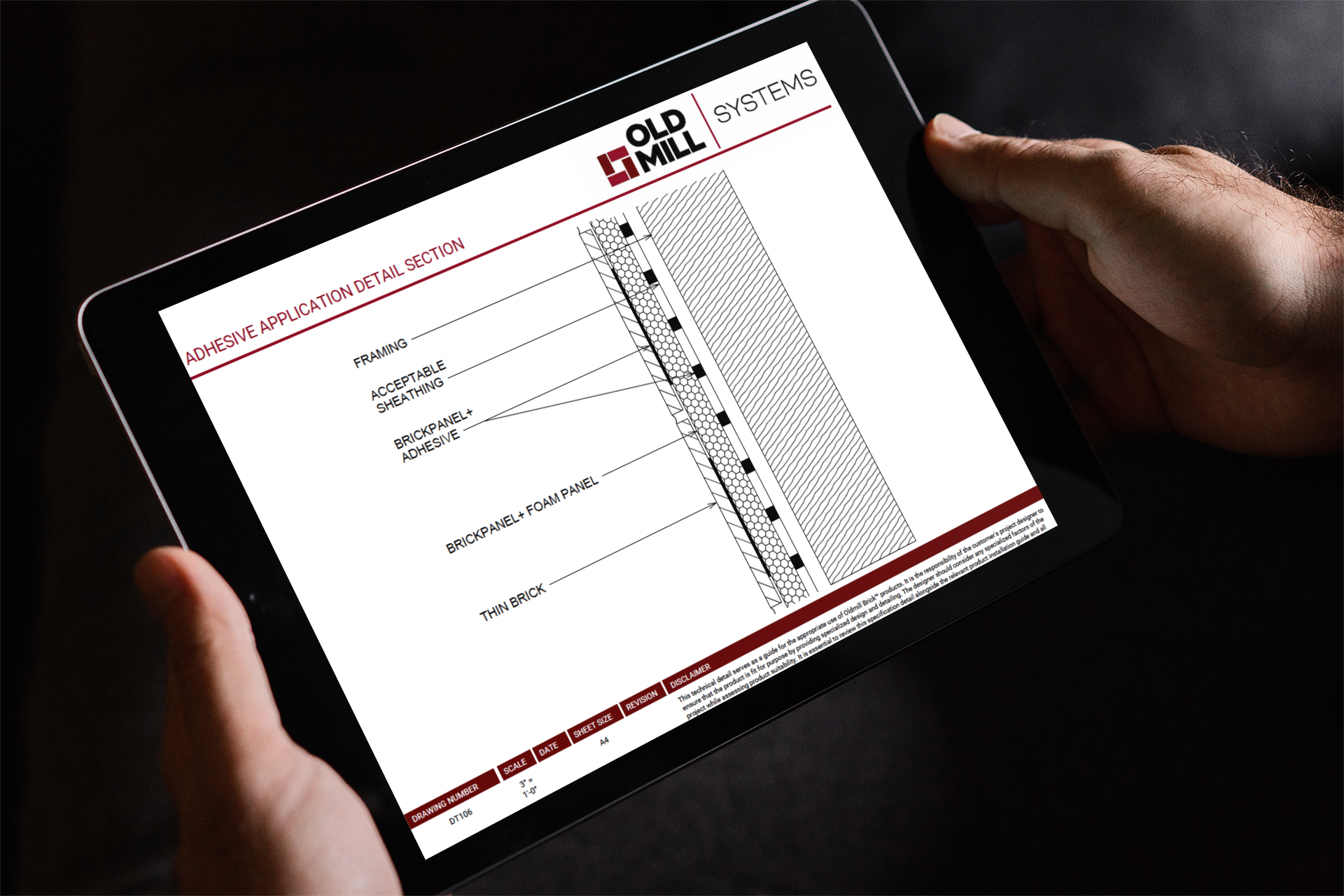
In both cases, look for systems that reduce complexity and installation risk. Old Mill Building Products engineered the Panel+ system as a single-source solution, integrating insulation, drainage, and veneer alignment in one assembly. This approach gives you fewer trades, faster installs, and more predictable moisture performance.
In Conclusion: Protecting Your Building Envelope from Moisture Damage
Effective moisture management requires drainage, ventilation, and weather barriers working together as a system. Each layer handles a specific part of the moisture load: drainage removes bulk water, ventilation promotes drying, and the weather barrier blocks intrusion while allowing vapor movement.
When these components integrate at the design stage rather than being assembled piecemeal in the field, you get better performance and fewer callbacks. The right insulated wall panel system protects your building's R-value, helps you meet energy codes, and extends the service life of the entire envelope.
FAQs About How Moisture Management Works in Insulated Wall Panels
What causes moisture problems in insulated wall panels?
Moisture problems typically result from bulk water intrusion, trapped vapor, or condensation on cold surfaces. Poor flashing details, inadequate drainage, and vapor barriers in the wrong location are common causes.
Old Mill Building Products addresses these concerns through integrated cross-drainage channels and properly positioned weather barriers in the Panel+ system.
How do drainage channels prevent water damage?
Drainage channels create pathways for water to flow downward and exit through weep holes or flashings. They prevent water from pooling behind cladding where it could saturate insulation or cause structural damage.
Cross-drainage designs, like those in Panel+ panels, handle water from multiple directions for more reliable protection.
Why is ventilation important behind brick or stone cladding?
Ventilation allows moisture-laden air to circulate and dry naturally. Brick and stone are reservoir claddings that absorb rainwater, then release it as vapor. Without a ventilated air gap, that moisture migrates into your wall assembly.
What is a water-resistive barrier and where should it go?
A water-resistive barrier (WRB) is a material that blocks liquid water while allowing water vapor to pass through. It should be located behind the drainage cavity and in front of any moisture-sensitive materials like sheathing or insulation.
Old Mill Building Products offers a fluid-applied Weather Barrier that creates a monolithic protective layer with no seams.
Can moisture damage reduce my building's energy efficiency?
Yes. Wet insulation loses a significant portion of its R-value. Water displaces the air pockets that create thermal resistance, forcing your HVAC system to work harder. Keeping insulation dry is essential to maintaining your designed energy performance.
How does Panel+ from Old Mill Building Products manage moisture?
Panel+ integrates cross-drainage channels, ventilation provisions, and a fluid-applied weather barrier into one NFPA 285-tested system. This design keeps bulk water moving out of the assembly while protecting insulation from vapor damage.
The result is dependable moisture control with reduced labor and fewer installation variables.