Exterior walls fail energy code inspections for reasons that go far beyond insulation thickness. Thermal bridging through steel and wood framing, uncontrolled air leakage, and the gap between rated R-value and actual whole-wall performance are the three primary culprits. Old Mill Building Products helps architects identify these failure points early in design—before they become costly rework on the jobsite.
This article breaks down each failure mode, explains how the 2024 IECC and ASHRAE 90.1-2022 requirements have raised the bar, and walks you through the specification checkpoints you can use to keep your exterior wall assemblies code-compliant from the start.
Key Takeaways: Why Exterior Walls Fail Energy Codes in 2026
- Thermal bridging through steel studs can reduce effective wall insulation performance by 50 percent or more.
- Cavity insulation alone no longer meets code in most climate zones—exterior insulation is now required.
- Air leakage through unsealed penetrations and joints can cancel out the benefit of high R-value insulation.
- Whole-wall R-value calculations account for framing, fasteners, and transitions that rated R-values ignore.
- Old Mill Building Products' Panel+ system integrates insulation and air barrier in one assembly for easier code compliance.
What Is Thermal Bridging and Why Does It Cause Energy Code Failures?
Thermal bridging occurs when heat flows through highly conductive materials—like steel studs—that bypass your cavity insulation. Steel conducts heat so efficiently that even perfectly installed batts lose significant performance at every stud line.
According to research from the Department of Energy's Oak Ridge National Laboratory, thermal bridging in steel-framed walls can reduce the effective R-value of cavity insulation by 50 percent or more. This means an R-19 batt in a steel-framed wall might perform closer to R-9 in real-world conditions.
The 2024 IECC now requires exterior insulation in Climate Zones 4 and above for steel-framed commercial walls. Without it, you are unlikely to pass inspection.
How Air Leakage Undermines Wall Insulation Performance
Air leakage creates pathways for conditioned air to escape and outdoor air to infiltrate your building envelope. These pathways often occur at penetrations, joints, window frames, and transitions between different wall assemblies.
Even a wall with excellent R-value can fail energy performance targets if air leakage is not controlled. This is why the 2024 IECC now mandates whole-building air barrier testing on commercial buildings over 5,000 square feet in Climate Zones 4 and above.
Your wall assembly needs both insulation and a verified air barrier working together. One without the other leaves performance gaps that show up in blower-door tests and, ultimately, energy bills.
What Is Whole-Wall R-Value and How Does It Differ from Rated R-Value?
Rated R-value describes the thermal resistance of insulation material in isolation—the number printed on the packaging. Whole-wall R-value, by contrast, accounts for the thermal performance of your entire assembly: framing, sheathing, fasteners, headers, and transition details.
Building scientists at Oak Ridge National Laboratory developed the whole-wall R-value concept in the 1990s to address the gap between laboratory ratings and field performance. Their testing showed that real-world wall assemblies often perform significantly lower than what rated R-values suggest.
When you specify insulation, make sure your energy model uses whole-wall calculations. Otherwise, you may design an assembly that meets prescriptive requirements on paper but fails the performance path in practice.
Why the 2024 IECC and ASHRAE 90.1-2022 Raised the Bar
The latest energy codes tightened requirements across three key areas: insulation values, air barrier testing, and fenestration performance. These changes affect nearly every commercial and many residential projects.
For exterior walls, the 2024 IECC expanded prescriptive requirements for exterior insulation to additional climate zones and increased minimum R-values for many wall types. The code also clarifies that insulation interrupted by framing, fasteners, or other thermal bridges does not qualify as exterior insulation.
ASHRAE 90.1-2022 aligns with these changes and introduces stricter envelope performance factors for the building trade-off option. If your typical wall details worked under 2018 codes, you should verify them against current requirements before starting your next project.
How to Diagnose Thermal Bridging and Air Leakage in Early Design
Catching these issues early saves money and prevents inspection delays. Start by evaluating your wall assembly at every thermal break: stud locations, window frames, shelf angles, and roof-to-wall transitions.
Ask these questions during schematic design: Does your insulation strategy address framing members, or does it rely solely on cavity fill? Have you specified an air barrier that can be verified through testing? Do your details show how insulation remains unbroken at corners, penetrations, and slab edges?
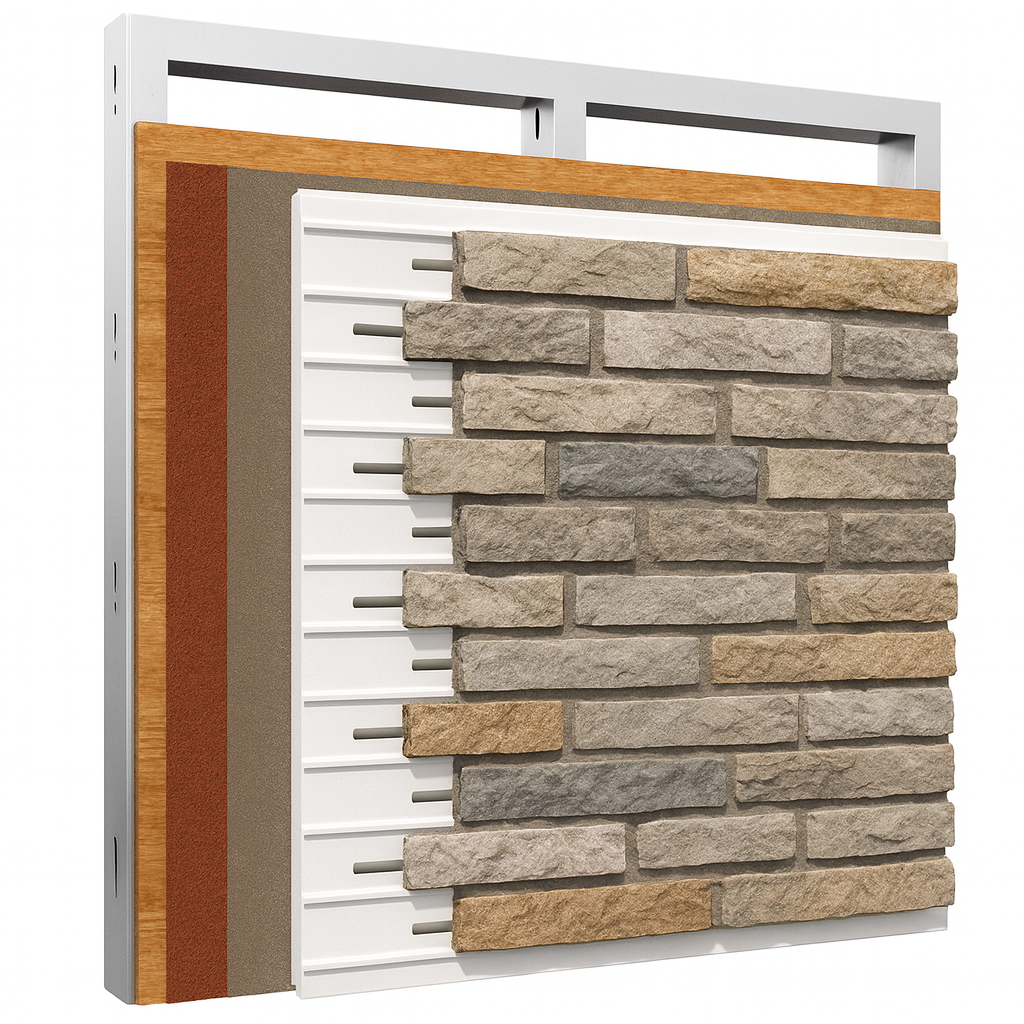
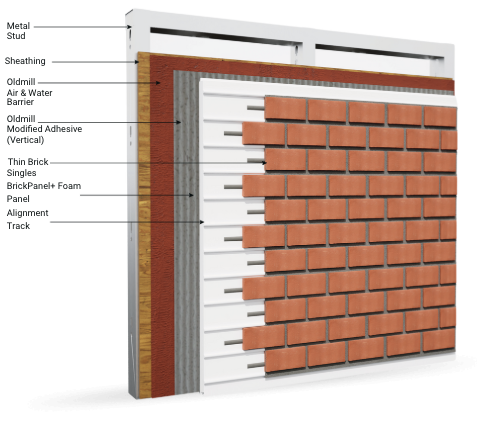
Old Mill Building Products offers the Panel+ wall system, which integrates insulation, air barrier, and drainage plane in a single assembly. This reduces the number of control layers you need to coordinate and makes inspection documentation simpler.
Specification Checkpoints for Energy Code Compliance
Use this checklist to verify your exterior wall details before submitting for permit:
- Confirm exterior insulation meets minimum R-value for your climate zone
- Verify insulation remains uninterrupted at framing, fasteners, and transitions
- Specify air barrier material and identify inspection access points
- Include whole-wall R-value or U-factor calculations in your energy documentation
- Detail sealant locations at all penetrations and joints
How Insulated Wall Panels Simplify Code Compliance
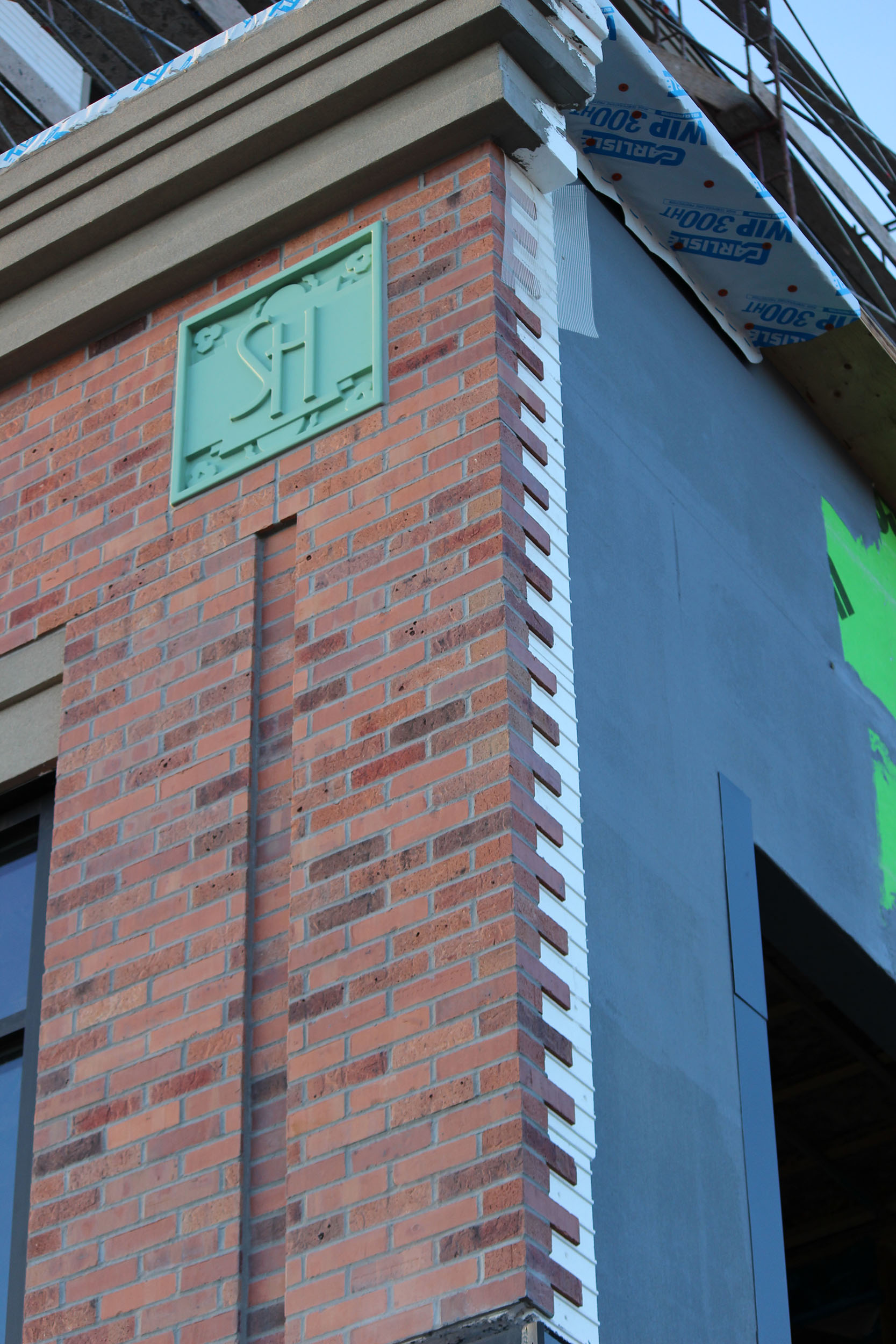
Prefabricated insulated wall panels address thermal bridging, air leakage, and installation consistency in one product. Instead of coordinating cavity insulation, sheathing, air barrier, and exterior insulation as separate layers, you install a single panel with integrated performance.
Old Mill Building Products' Panel+ delivers an R-value of 4.2 per inch and comes in thicknesses from 1 inch to 4 inches, with custom options available. The system includes built-in drainage channels for moisture management and carries NFPA 285 compliance for fire safety.
For architects and contractors, Panel+ reduces installation time by up to 60 percent and improves energy efficiency by up to 40 percent compared to traditional assemblies. These numbers translate directly into faster inspections and more predictable project schedules.
Common Detailing Mistakes That Lead to Code Failures
Even well-intentioned designs fail code when details get overlooked. Watch for these common errors:
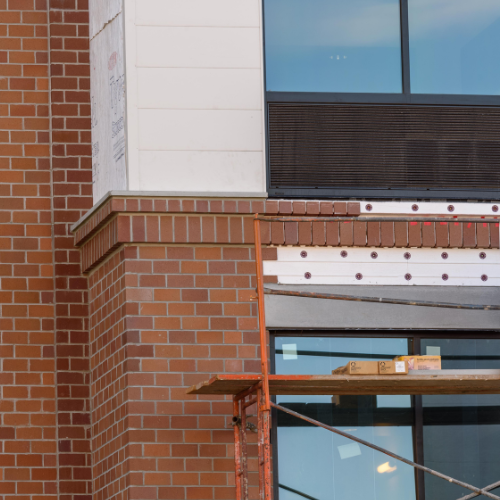
Shelf angles that interrupt exterior insulation create thermal bridges at every floor line. Specify thermally broken shelf angles or detail the insulation to wrap the angle completely.
Window frames set in the stud plane rather than the insulation plane create both thermal bridges and air leakage pathways. Move your window installation outward to align with your insulation strategy.
Parapet caps and roof-to-wall transitions often receive less insulation than the field of wall. Carry your insulation thickness through these transitions to maintain a complete thermal envelope.
In Conclusion: How to Keep Your Exterior Walls Code-Compliant
Exterior walls fail energy codes when thermal bridging, air leakage, and inadequate whole-wall performance work against your insulation strategy. The 2024 IECC and ASHRAE 90.1-2022 have raised the bar, requiring exterior insulation in more climate zones and mandating air barrier testing on commercial buildings.
To avoid costly rework, address these issues in schematic design—not during construction. Specify wall systems that integrate insulation and air barriers, verify your details at thermal breaks, and use whole-wall calculations in your energy modeling.
Old Mill Building Products gives you wall systems designed for today's energy codes, with integrated insulation, built-in drainage, and NFPA 285 compliance to simplify your path to inspection approval.
FAQs About Why Exterior Walls Fail Energy Codes in 2026
What is the most common reason exterior walls fail energy code inspections?
Thermal bridging through framing members is the most frequent cause of energy code failures. Steel studs conduct heat so efficiently that cavity insulation alone cannot meet current code requirements in most climate zones.
Adding exterior insulation eliminates thermal bridging by creating an unbroken thermal layer outside your framing.
Does the 2024 IECC require exterior insulation on all buildings?
The 2024 IECC requires exterior insulation on steel-framed and metal building walls in Climate Zones 4 and above. Wood-framed assemblies have different prescriptive options depending on climate zone.
Check your specific climate zone requirements before finalizing your wall assembly.
How does Old Mill Building Products help architects meet energy codes?
Old Mill Building Products' Panel+ system integrates insulation, air barrier, and drainage plane in one assembly. This design eliminates thermal bridging, simplifies installation, and delivers code-compliant performance with up to 40 percent improved energy efficiency.
The system carries NFPA 285 compliance and comes with a 15-year warranty.
What is the difference between rated R-value and whole-wall R-value?
Rated R-value measures insulation material performance in isolation. Whole-wall R-value accounts for your entire assembly, including framing, fasteners, and transitions that reduce real-world performance.
Energy codes increasingly use whole-wall metrics to ensure buildings perform as designed.
Can air leakage cause a wall to fail energy code even with adequate insulation?
Yes. Air leakage creates pathways for heat transfer that bypass your insulation entirely. The 2024 IECC now requires whole-building air barrier testing on commercial buildings over 5,000 square feet in Climate Zones 4 and above.
Old Mill Building Products' Panel+ includes an integrated air barrier to help you meet these testing requirements.