
How Exterior Wall Systems Improve Retrofit Performance
Why Nominal R-Value Doesn't Tell the Full Story
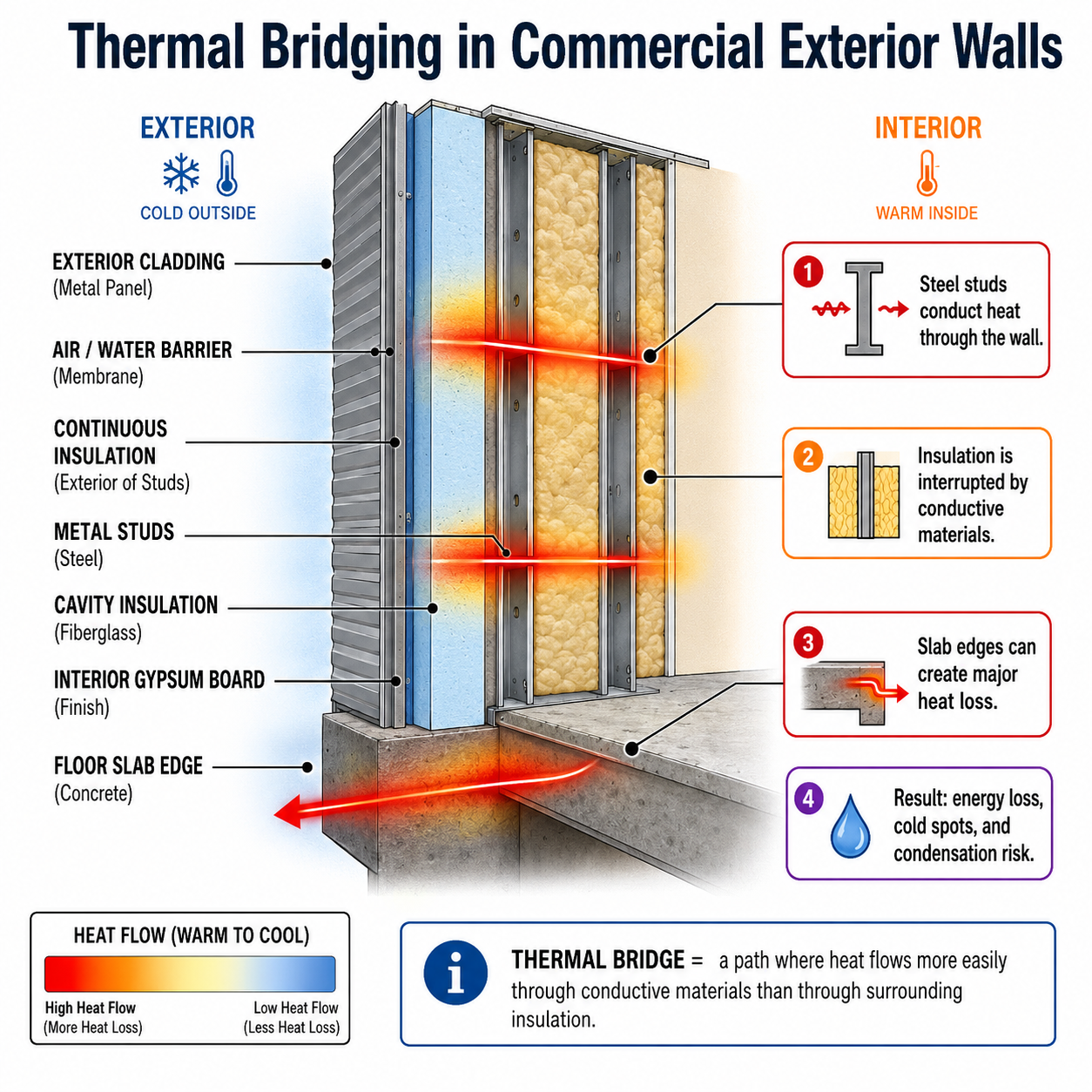
When you're evaluating insulation options for a retrofit, nominal R-value is often the first spec you check. But that single number doesn't account for what happens at studs, fasteners, joints, and penetrations. Thermal bridging through these elements can reduce effective wall performance by 20-30%, according to U.S. Department of Energy research on insulation.
Whole-wall thermal performance measures the actual R-value of the entire wall assembly—not just the insulation between studs. For retrofit projects, this distinction determines whether your energy model predictions match real-world results.
What Drives Whole-Wall Thermal Performance in Retrofits
Three factors shape the thermal performance of an insulated exterior wall system during a retrofit: the envelope's ability to block thermal bridges, how well the assembly manages moisture, and the labor efficiency of installation.
Retrofit conditions rarely match new construction. Existing substrates may be uneven. Code paths can be complex. And budget constraints often mean your crew needs to move fast without sacrificing quality. The wall system you choose has to address all three concerns.
Thermal Bridging: The Hidden Performance Killer
Thermal bridging occurs when conductive materials—like steel studs or wood framing—create pathways for heat to bypass your insulation. In a study by the National Institute of Standards and Technology, researchers found that metal framing can reduce wall R-value by up to 50% compared to nominal insulation ratings.
For retrofits, the challenge intensifies. Existing framing often lacks thermal breaks, and adding cavity insulation alone won't solve the problem. The envelope needs an uninterrupted insulation layer from foundation to roofline.
Old Mill Panel+ delivers an R-value of 4.2 per inch and wraps the building envelope in an unbroken layer of EPS foam insulation. With panel thicknesses from 1 to 4 inches—plus custom options—you can achieve assemblies up to R-20 while eliminating thermal bridges at studs and fastener points.
Moisture Management in Retrofit Assemblies
Adding insulation to an existing wall changes its moisture profile. When warm interior air meets a cold surface inside the assembly, condensation can form. Over time, trapped moisture leads to mold, rot, and degraded insulation performance.
A well-designed insulated wall system accounts for vapor drive and drying potential. The assembly needs a clear drainage path and ventilation channels to evacuate water that penetrates the cladding.
Panel+ includes built-in drainage and ventilation channels engineered directly into the EPS panels. When installed with the fluid-applied adhesive method, Old Mill Air & Water Barrier creates a secondary line of defense at the substrate level. Water that enters the assembly drains out rather than accumulating behind the veneer.
Labor Efficiency: Why Installation Speed Matters
Retrofit projects operate under constraints that new builds rarely face. Occupied spaces may require phased installation. Weather windows can be limited. And every extra day on the scaffold adds cost.
Traditional multi-step veneer methods require separate installation of insulation, weather barriers, lath, scratch coats, and veneer—often by different crews with different schedules. Coordination gaps introduce delays and increase the risk of defects.
Old Mill Panel+ consolidates multiple envelope functions into one field-installed system. The EPS panels arrive with precision alignment grooves for thin brick, stone, or tile veneer. Crews can reduce labor time by up to 60% compared with conventional methods, which translates directly to lower installed cost and faster project turnover.
Code Compliance: Meeting NFPA 285 and Energy Standards
Fire safety codes for exterior wall assemblies have tightened in recent years. NFPA 285 tests whether the combination of foam insulation, weather barrier, and cladding can resist flame spread and heat release in a fire event.
For architects and builders specifying retrofit assemblies, NFPA 285 compliance isn't optional—it's a code requirement for most multi-story buildings. And energy codes like IECC and ASHRAE 90.1 now mandate minimum R-values and thermal bridging mitigation that many legacy walls can't meet.
Panel+ assemblies are NFPA 285 compliant when installed according to Old Mill specifications. The system supports tested wall assemblies that meet current fire and energy code requirements, giving specifiers a clear compliance path for retrofit projects.
Comparing Wall Performance Beyond the Spec Sheet
Insulated wall systems vary in how they deliver thermal performance, moisture management, and installation efficiency. When evaluating options for your retrofit, consider these factors:
- Whole-wall R-value: Does the system eliminate thermal bridges, or does it rely on cavity insulation that loses effectiveness at framing members?
- Moisture control: Are drainage channels integrated into the panel design, or do they require separate installation steps?
- Labor requirements: How many trades and installation phases does the assembly require from sheathing to finished veneer?
- Code path clarity: Is the assembly tested and documented for NFPA 285 and current energy codes?
- Veneer options: Can the system support real thin brick, stone, or tile—or only specific proprietary finishes?
Panel+ from Old Mill Building Products addresses each of these factors as an integrated system. One source. One warranty. One accountability structure from concept to punch list.
Real-World Performance: What the Numbers Show
Project data from commercial retrofits using Panel+ shows measurable improvements in both energy performance and installation efficiency:
- Energy cost reductions up to 40% from eliminating thermal bridging and achieving true whole-wall R-values
- Labor time reductions up to 60% compared with traditional lath-and-scratch veneer methods
- R-values up to 20 with standard panel thicknesses, meeting and exceeding current energy code requirements
For builders managing warranty exposure and long-term performance, Panel+ adds confidence without complicating the build. The system's 15-year warranty covers the complete assembly—not just individual components.
When Retrofit Projects Benefit Most from Insulated Wall Systems
Not every retrofit requires a full envelope upgrade. But certain project conditions make insulated exterior wall systems particularly valuable:
- Buildings with visible thermal bridging patterns (ghosting at studs, condensation issues)
- Properties facing energy code upgrades or efficiency mandates
- Projects where the existing cladding needs replacement and the budget supports envelope improvement
- Multi-family and commercial buildings where NFPA 285 compliance is required
- Renovations where faster installation translates to reduced disruption for occupants
In each scenario, an integrated wall system delivers value beyond insulation alone. You're upgrading the entire envelope—thermal performance, moisture control, fire safety, and aesthetics—in a single installation sequence.
Specifying Insulated Wall Systems for Your Next Retrofit
The decision to add an insulated wall system to a retrofit project depends on project-specific factors: existing conditions, energy goals, budget constraints, and code requirements. But the evaluation framework remains consistent.
Start with whole-wall thermal performance, not nominal R-value. Account for thermal bridging, moisture management, and installation efficiency. Verify the code compliance path for your jurisdiction and building type.
Old Mill Panel+ supports architects and builders with tested assemblies, clear installation documentation, and responsive technical support. For retrofit projects where performance, speed, and compliance all matter, the system delivers measurable results from sheathing to finished veneer.
Looking for a project like yours? Contact Old Mill Building Products for sector-specific examples, assembly details, and technical guidance tailored to your retrofit requirements.