
What Is an Insulated Wall Panel for Exterior Walls
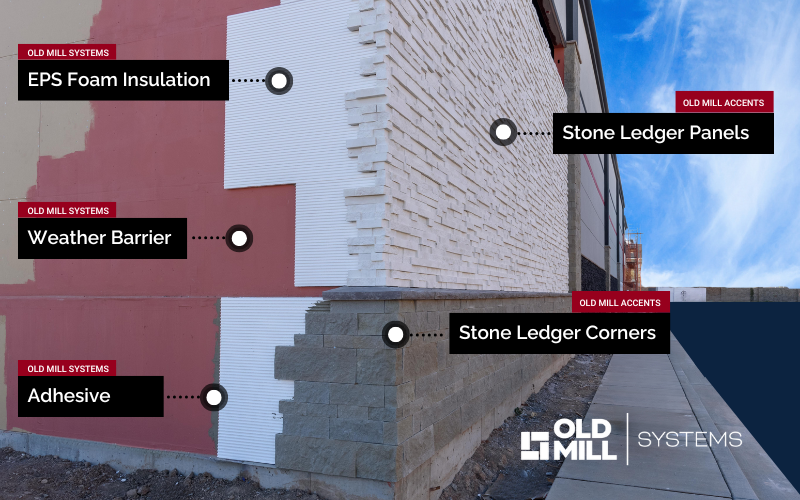
Learn how Old Mill Panel+ combines continuous insulation, drainage, and veneer alignment for thin brick, stone, or tile exterior walls.
Exterior wall assemblies have to do more than hold cladding. They need to manage heat, air, water, drainage, fire performance, and jobsite labor.
That usually means several separate products installed in the right order: sheathing, air and water barrier, insulation, drainage, fasteners, adhesive, and cladding. Every layer adds time, coordination, and risk.
Old Mill Building Products developed Panel+ to simplify that process. Panel+ is an insulated masonry veneer wall system that combines continuous insulation, drainage, and precise veneer alignment in one coordinated assembly. It is designed for thin brick, stone, or tile finishes and can be installed using either a fluid-applied adhesive method or a mechanically fastened method.
Key Takeaways: What Is an Insulated Wall Panel for Exterior Walls
- Insulated wall panels add continuous insulation to exterior walls, helping reduce thermal bridging through framing.
- Panel+ is not just foam board. It is a coordinated wall system that includes EPS insulation panels, air and water management, adhesive or mechanical attachment, and adhered veneer.
- Panel+ supports thin brick, stone, or tile, giving architects real masonry aesthetics with modern wall performance.
- Built-in alignment channels speed veneer installation and help crews maintain consistent coursing.
- Panel+ tested assemblies have passed NFPA 285, giving design teams a tested path for many commercial and multifamily projects.
- Panel+ can reduce labor up to 60% compared with traditional multi-step veneer installation methods.
What Is an Insulated Wall Panel?
An insulated wall panel is an exterior wall component that adds insulation outside the wall structure. This layer helps improve whole-wall thermal performance by reducing the heat loss that occurs through framing members.
In building code language, this is often called continuous insulation, or CI. Continuous insulation runs across the structural members of the wall, with interruptions only at fasteners and service openings.
Panel+ uses molded EPS foam panels as the continuous insulation layer. These panels are shaped to receive thin brick, stone, or tile veneer while also supporting drainage and ventilation behind the cladding.
What Components Are in the Panel+ Wall System?
Panel+ is built from coordinated components that work together from the sheathing out.
Old Mill Air and Water Barrier
In the fluid-applied method, Old Mill Air and Water Barrier is applied over approved substrates to create a continuous air and water control layer. It is vapor permeable, helps reduce air leakage, and protects approved substrates from incidental moisture.
Old Mill EPS Foam Panel
The Panel+ EPS foam panel provides continuous insulation and a precision base for adhered veneer. The panel is available in standard 1-inch to 4-inch thicknesses, with custom options available for project needs.
The EPS panel delivers R-4.2 per inch at 75°F and supports wall assemblies that need improved thermal performance.
Drainage and Ventilation Channels
Panel+ panels include built-in drainage channels. In the fluid-applied adhesive method, the adhesive is combed vertically with a 1/2-inch notch trowel to create vertical moisture channels behind the panel. These channels help incidental water drain and allow the wall assembly to dry.
Old Mill Adhesive
Old Mill Adhesive is used to bond EPS panels to approved substrates in the fluid-applied method and to adhere veneer units to the Panel+ face. It is a polymer-modified cementitious adhesive designed for high bond strength and exterior durability.
Mechanical Fasteners
In the mechanically fastened method, Panel+ is secured with Old Mill 2-inch washers and corrosion-resistant fasteners. This method uses a drainable building wrap behind the panels and is often preferred when project conditions call for direct mechanical attachment.
Thin Brick, Stone, or Tile Veneer
Panel+ is engineered for adhered veneer finishes, including Old Mill thin brick, thin stone, and approved tile. The visible cladding layer delivers the finished design while the system behind it manages insulation, drainage, and alignment.
How Does Panel+ Reduce Installation Labor?
Traditional adhered masonry veneer assemblies often require several separate steps:
- Install WRB or air barrier
- Install insulation
- Install lath or backer system
- Create layout lines
- Set veneer
- Point or grout joints
- Manage transitions, penetrations, and movement joints
Panel+ reduces that complexity. The EPS panel provides both continuous insulation and veneer alignment. Crews do not need to snap every layout line or rely on spacers for every course of thin brick.
Old Mill’s system is designed to reduce labor by up to 60%, depending on project conditions, crew experience, veneer type, and installation method.
Two Approved Ways to Install Panel+
Panel+ can be installed in two ways. The right method depends on the project, substrate, code requirements, and wall design.
1. Fluid-Applied Adhesive Method
The fluid-applied method is used when the wall design calls for a continuous Old Mill Air and Water Barrier as part of the assembly.
Basic sequence:
- Prepare approved substrate.
- Treat joints, corners, rough openings, and transitions.
- Apply Old Mill Air and Water Barrier.
- Allow proper cure time.
- Apply Old Mill Adhesive with a 1/2-inch notch trowel.
- Comb adhesive vertically to form drainage channels.
- Set Panel+ EPS panels into the adhesive.
- Allow panels to cure.
- Install thin brick, stone, or tile veneer.
- Point or grout joints.
This method creates a fully bonded installation with integrated air, water, insulation, drainage, and veneer alignment layers.
2. Mechanically Fastened Method
The mechanically fastened method uses a drainable building wrap behind the EPS panels and Old Mill washer fasteners to secure panels to the wall framing or sheathing.
Basic sequence:
- Install drainable building wrap per project requirements.
- Place Panel+ panels starting at an outside corner.
- Fasten panels through sheathing into framing with Old Mill washers and approved screws.
- Seat washers flush with the panel face without overdriving.
- Stagger panel seams and maintain required clearances.
- Install veneer with Old Mill Adhesive.
- Point or grout joints.
This method gives contractors another approved path when mechanical attachment works better for the substrate or jobsite conditions.
Why Continuous Insulation Matters
Exterior walls lose heat through framing members. This is called thermal bridging.
Cavity insulation sits between studs, but studs still conduct heat through the wall. Continuous insulation helps reduce that heat flow by wrapping the wall outside the framing.
For architects and builders working under IECC and ASHRAE 90.1 energy requirements, CI is often a practical way to improve wall performance and meet code targets. Panel+ helps by placing EPS insulation outboard of the sheathing while also providing a veneer-ready substrate.
Does Panel+ Help with Moisture Management?
Yes. Panel+ is designed as a drained and ventilated adhered veneer system.
Moisture management depends on the full wall assembly, not one product alone. Panel+ addresses this through:
- Old Mill Air and Water Barrier in the fluid-applied method
- Drainable building wrap in the mechanically fastened method
- Built-in drainage channels in the EPS panel
- Vertical adhesive channels in the fluid-applied method
- Flashing, sealants, backer rod, and proper detailing at openings and transitions
The goal is simple: manage incidental water, direct it out of the assembly, and allow the wall to dry.
Is Panel+ NFPA 285 Compliant?
Panel+ has tested assemblies that passed NFPA 285-19, the standard fire test method for exterior wall assemblies containing combustible components.
That distinction matters. NFPA 285 applies to complete wall assemblies, not isolated products. Architects, specifiers, and code officials should review the tested assembly and confirm that the project design matches the tested or approved configuration.
For many commercial, multifamily, education, hospitality, medical, and modular projects, this gives the design team a clearer path when foam plastic insulation is part of the exterior wall.
What Exterior Finishes Work with Panel+?
Panel+ is designed for adhered veneer finishes, including:
- Thin brick
- Thin stone
- Approved tile
Thin brick is one of the strongest fits because the panel’s alignment tracks help speed layout and maintain consistent coursing. The result is the look of real masonry with a lighter, faster, insulated wall system.
Who Benefits from Panel+?
Architects
Panel+ gives architects a tested wall system with continuous insulation, drainage, veneer alignment, and NFPA 285 tested assemblies. It also supports architectural relief, depth changes, and masonry aesthetics without traditional full-depth brick detailing.
Contractors
Contractors get a faster installation path with fewer layout steps and coordinated system components. Panel+ helps reduce trade coordination, jobsite complexity, and veneer alignment issues.
Owners and Developers
Owners benefit from a wall system designed for energy performance, moisture management, and long-term durability. The system also supports a 15-year warranty when installed as the complete Old Mill Panel+ Wall System per Old Mill requirements.
Panel+ vs. Traditional Adhered Veneer Assemblies
| Factor | Traditional Multi-Step Assembly | Old Mill Panel+ System |
| Insulation | Separate rigid insulation layer | EPS continuous insulation panel |
| Veneer layout | Chalk lines, spacers, manual layout | Built-in alignment tracks |
| Moisture management | Separate WRB, flashing, drainage detailing | Coordinated air/water and drainage approach |
| Attachment | Varies by assembly | Fluid-applied adhesive or mechanical fastening |
| Cladding options | Thin brick, stone, tile, or other veneer systems | Thin brick, stone, or approved tile |
| Fire compliance | Assembly must be verified | NFPA 285 tested assemblies available |
| Labor | Multiple steps and more coordination | Up to 60% labor reduction |
What Should You Consider When Specifying Insulated Wall Panels?
Selecting the right insulated wall panel system depends on project requirements, climate zone, and code jurisdiction. Here are the key factors to evaluate.
Required R-Value
Climate zone and energy code determine the minimum R-value for exterior insulation. Panel systems come in varying thicknesses—select one that meets or exceeds code requirements for your project location.
Fire Code Compliance
For buildings over a certain height or with specific occupancy types, NFPA 285 compliance is mandatory. Confirm that the panel system you specify has passed this test as a complete assembly.
Veneer Compatibility
Not all panel systems support all finish types. If your design calls for thin brick, verify that the panel includes appropriate adhesion surfaces and alignment features. Old Mill Building Products' Panel+ system is specifically designed for thin brick, stone, and tile applications.
In Summary: What to Know About Insulated Wall Panels for Exterior Walls
An insulated wall panel should do more than add R-value. It should help the full wall assembly perform.
Old Mill Panel+ combines continuous insulation, drainage, veneer alignment, and tested wall assembly performance in a system designed for thin brick, stone, and tile. With two installation methods, NFPA 285 tested assemblies, R-4.2 per inch EPS insulation, and labor savings up to 60%, Panel+ gives architects and contractors a practical way to build better exterior masonry veneer walls.
For projects where energy performance, code review, installation speed, and real masonry appearance all matter, Panel+ is the better way to build from the sheathing out.