
Best Exterior Wall System for Energy Retrofits
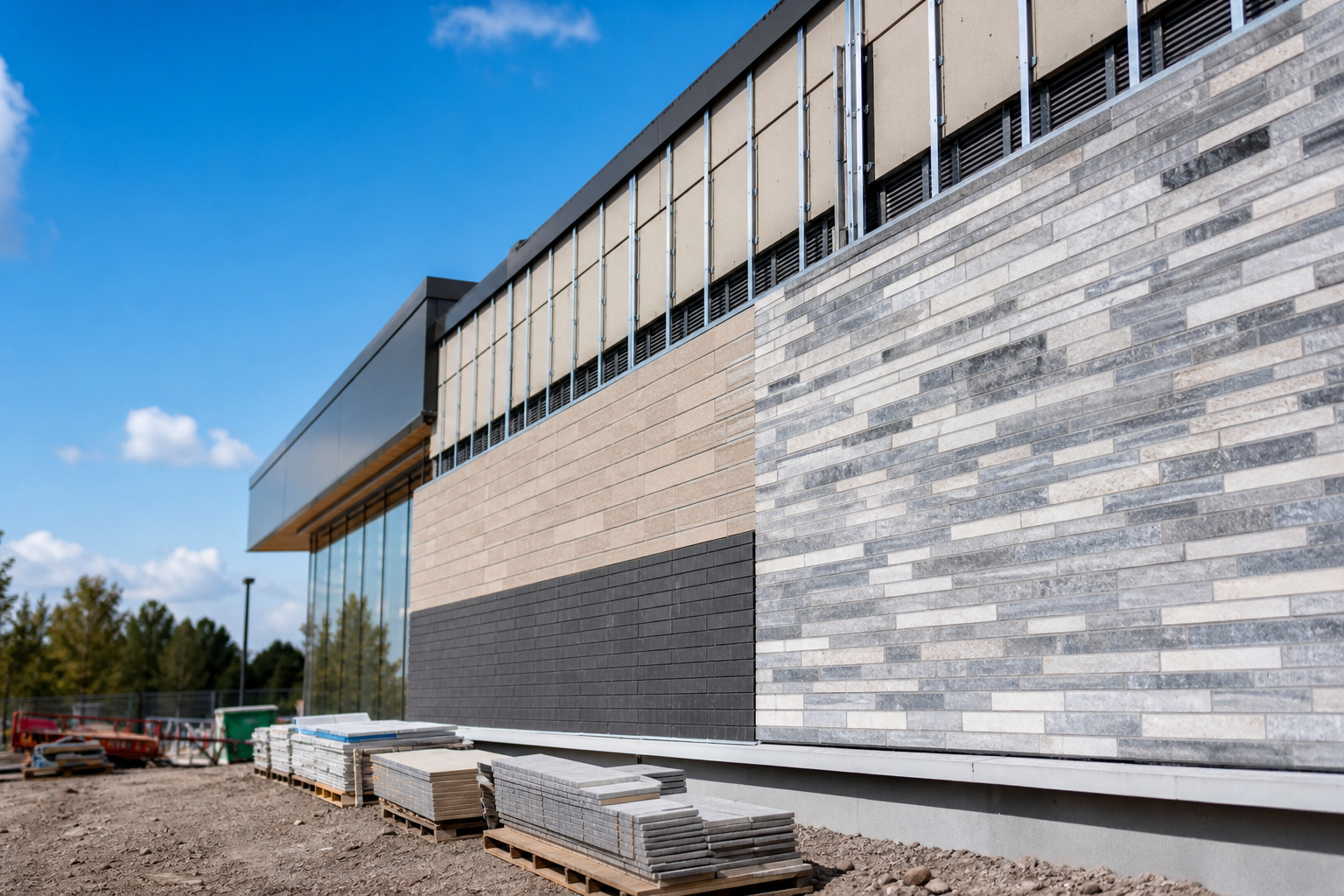
Energy retrofits demand more than improved R-values. You're managing thermal bridging, moisture control, labor coordination, and code compliance—all while keeping the project on schedule. The exterior wall system you specify determines whether those goals align or conflict.
For architects and builders evaluating insulated wall panels for retrofit projects, the decision comes down to measurable performance and practical execution. This guide covers what matters: thermal performance, moisture management, installation efficiency, and how to compare systems for real-world results.
Why Exterior Wall Systems Matter for Energy Retrofits
Thermal bridging accounts for up to 30 percent of heat loss in insulated buildings. In retrofit applications, that problem compounds—existing structures often have cold concrete bands, aging windows, and layers of decisions made decades ago. Adding exterior insulation without addressing thermal bridging delivers diminishing returns.
An effective exterior wall system addresses three requirements simultaneously. First, it adds insulation to the outside of the envelope, breaking the thermal bridge at studs and framing. Second, it manages moisture through drainage and ventilation. Third, it simplifies installation to reduce labor time and coordination.
Systems that achieve only one or two of these goals create callbacks, warranty exposure, and energy performance that falls short of projections. The U.S. Department of Energy notes that controlling moisture improves the effectiveness of air sealing and insulation efforts.
Key Performance Criteria for Insulated Wall Panels
Before comparing systems, establish the metrics that matter for your project. The following criteria separate high-performance assemblies from assemblies that look good on paper but underperform in the field.
Thermal Performance: R-Value and U-Factor
R-value per inch tells only part of the story. What matters is the whole-wall R-value—the thermal resistance of the complete assembly including fasteners, brackets, and transitions. Some systems advertise R-4 or R-5 per inch at the insulation layer but lose significant performance at attachment points.
Old Mill Building Products' Panel+ Wall System delivers R-4.2 per inch at 75°F, with standard thicknesses from 1 inch to 4 inches. That means you can achieve R-16.8 with a 4-inch panel—or specify custom thicknesses when projects require higher performance.
For retrofit applications where wall thickness affects window detailing and sill extensions, every inch of insulation should deliver predictable thermal value. Panel+ achieves this through EPS foam panels with built-in alignment for the veneer layer.
Moisture Management: Drainage and Drying
Water intrusion causes more building failures than any other single factor. In retrofit applications, adding a new layer over an existing wall creates additional risk. The new system must not trap moisture inside the old assembly or block safe drying paths.
Effective moisture management requires three elements: a weather barrier, a drainage plane, and ventilation channels. Some systems require separate installation of each component. Panel+ integrates all three from the sheathing out.
The Old Mill Air & Water Barrier applies to the approved substrate in the fluid-applied adhesive method. Built-in drainage channels in the Panel+ EPS panels evacuate water that penetrates the veneer, while ventilation channels promote drying of the drainage plane. This coordinated approach reduces the risk of moisture-related callbacks.
Fire Safety: NFPA 285 Compliance
NFPA 285 is the standard fire test method for exterior assemblies containing combustible components. The test evaluates vertical fire spread up the exterior face and lateral fire spread into the wall cavity. Passing NFPA 285 is mandatory for buildings over 40 feet tall when foam plastic insulation is present.
Panel+ supports tested NFPA 285 compliant wall assemblies. That compliance applies to the complete system—not just individual components. For architects navigating permit reviews in cities like New York, Boston, or Chicago where code enforcement has tightened, specifying a pre-tested assembly eliminates documentation gaps.
Labor Efficiency: Installation Time and Coordination
Retrofit projects face tighter schedules than new construction. Crews work around occupied spaces, weather windows compress, and every trade added to the sequence increases coordination complexity.
Panel+ reduces installation labor by up to 60 percent compared to traditional multi-step veneer methods. Because the EPS foam panels include built-in alignment for thin brick, stone, or approved tile, crews spend less time measuring and adjusting. The result: faster dry-in and veneer installation with reduced coordination on site.
Comparing Exterior Wall System Approaches
Three general approaches dominate the retrofit wall system market. Each has distinct characteristics that affect performance, installation, and long-term maintenance.
EIFS and Direct-Applied Systems
Exterior Insulation and Finish Systems (EIFS) integrate insulation, a base coat, mesh reinforcement, and a finish coat. They work well for retrofit applications where weight is a concern and substrate conditions vary.
EIFS assemblies deliver effective thermal performance and design flexibility. However, they require precise detailing at penetrations and transitions. Installation depends heavily on applicator skill, and the finish coat is susceptible to impact damage in high-traffic areas.
Precast and Prefabricated Panels
Factory-built panels arrive at the site ready for installation. Precast concrete sandwich panels offer structural performance, fire resistance, and thermal mass. Prefabricated EIFS panels reduce on-site labor by completing the assembly in controlled conditions.
The trade-off: weight and logistics. Precast panels require crane access and structural capacity that retrofit projects may not have. Prefabricated panels must be engineered to project-specific dimensions, which can extend lead times.
Field-Installed Insulated Veneer Systems
Systems like Panel+ occupy a middle ground. The EPS foam panels ship flat and install over approved substrates using either fluid-applied adhesive or mechanical fasteners. Thin brick, stone, or tile veneer is field-applied after the panels are in place.
This approach combines factory-engineered precision with field installation flexibility. Panel+ can be installed over a variety of substrates and assembly configurations, making it suitable for retrofit projects where existing wall conditions vary.
What to Evaluate When Selecting a System
Use the following checklist to compare exterior wall systems for your retrofit project:
- Whole-wall thermal performance: Request U-factor calculations that include fasteners and transitions, not just clear-wall R-values.
- Moisture control integration: Confirm the system addresses weather barrier, drainage, and ventilation as a coordinated assembly.
- NFPA 285 testing: Ask for the tested assembly report, not just component data sheets.
- Installation method compatibility: Verify the system works with your project's substrate and structural constraints.
- Veneer options: Confirm the system supports your desired finish—thin brick, stone, or tile—with tested adhesion.
- Warranty coverage: Review what the warranty includes and excludes, especially for moisture-related failures.
Panel+ addresses each of these criteria with a single-source system backed by a 15-year warranty. From the sheathing out, you get coordinated components: Old Mill Air & Water Barrier, Old Mill Adhesive, Panel+ EPS foam insulation panels, Old Mill fasteners and washers when mechanically fastened, and field-installed veneer.
Installation Methods: Fluid-Applied vs. Mechanically Fastened
Panel+ offers two approved installation methods. The choice depends on project conditions, substrate type, and crew preferences.
Fluid-Applied Adhesive Method
Old Mill Air & Water Barrier is applied separately to the approved substrate. Old Mill Adhesive is then combed vertically with a 1/2-inch notch trowel to create drainage channels before the Panel+ EPS panels are installed. This method works well on smooth, stable substrates where adhesive bond strength is critical.
Mechanically Fastened Method
A drainable building wrap is installed behind the Panel+ EPS panels. The panels are attached with Old Mill washers and approved fasteners. This method suits projects where substrate conditions vary or where mechanical attachment is preferred for long-term reliability.
Both methods deliver the same end result: a code-ready wall assembly with built-in moisture management and precise veneer alignment.
Real Finish Options: Thin Brick, Stone, and Tile
The veneer layer is what occupants and passersby see. Panel+ supports field-installed thin brick, stone, or approved tile—real materials that deliver lasting aesthetics without the weight of full masonry.
Old Mill Building Products sources thin brick from sustainable partners worldwide, offering the largest selection of genuine kiln-fired clay brick in America. Classic thin bricks deliver traditional uniformity; Artisan thin bricks offer hand-formed texture where no two bricks match.
For retrofit projects, thin brick veneer adds curb appeal without structural modifications. The Panel+ alignment system ensures consistent spacing and clean grout lines, reducing the variability that comes with traditional masonry installation.
Performance Summary: Panel+ Wall System
The Old Mill Panel+ Wall System addresses the core challenges architects, builders, and contractors face in energy retrofit projects:
- Thermal performance: R-4.2 per inch, with R-values up to 20 available in standard configurations.
- Moisture management: Built-in drainage and ventilation channels integrated with Old Mill Air & Water Barrier.
- Fire safety: NFPA 285 compliant wall assemblies tested and documented.
- Labor efficiency: Up to 60 percent reduction in installation labor compared to traditional methods.
- Energy savings: Up to 40 percent energy cost reduction by eliminating thermal bridging.
- Design flexibility: 1-inch to 4-inch standard thicknesses with custom options for architectural relief.
- Single-source warranty: 15-year system warranty covering coordinated components.
Panel+ has been used across hundreds of commercial and mixed-use projects to simplify envelope design, meet NFPA 285 requirements, and deliver a masonry finish. For builders managing warranty exposure and long-term performance, Panel+ adds confidence without complicating the build.
Frequently Asked Questions
What R-value do I need for my climate zone?
Energy code requirements vary by climate zone and construction type. Panel+ with 4 inches of EPS delivers R-16.8 at the insulation layer. For projects requiring higher performance, custom thicknesses are available. Consult your local energy code or an energy consultant for specific requirements.
Can Panel+ be installed over existing cladding?
Panel+ requires installation over approved substrates including sound concrete, masonry, or exterior grade gypsum sheathing. Whether to remove or retain existing cladding depends on substrate condition and project requirements. Contact Old Mill's technical team for project-specific guidance.
How does Panel+ compare to traditional EIFS?
Panel+ and EIFS both deliver exterior insulation, but Panel+ integrates veneer alignment and moisture channels into the foam panel itself. Panel+ also supports real thin brick, stone, or tile finishes rather than textured coatings. For projects where masonry aesthetics matter, Panel+ delivers the look of traditional construction with modern performance. The main difference between EIFS and Panel+ is that Panel+ is non-encpsulted.
Is Panel+ a prefabricated or factory-assembled panel?
No. Panel+ is an insulated masonry veneer wall system, not a prefabricated wall panel, SIP, insulated metal panel, or factory-assembled cladding panel. The EPS foam panels are manufactured components, but the veneer is installed in the field.
What training is available for installers?
Old Mill Building Products offers install guides, technical documentation, and responsive technical support. Samples, details, and installation guidance come standard with system specification.
Next Steps for Your Retrofit Project
Choosing the right exterior wall system for an energy retrofit requires balancing thermal performance, moisture control, code compliance, and installation efficiency. Panel+ from Old Mill Building Products delivers measurable value across all four criteria—with a single-source system and 15-year warranty.
Looking for a project like yours? Contact Old Mill Building Products for sector-specific examples, technical details, and samples to evaluate Panel+ for your next retrofit.